10% OF EVERY PURCHASE IS DONATED TO SPECIAL OLYMPICS & SPECIAL NEEDS HOCKEY

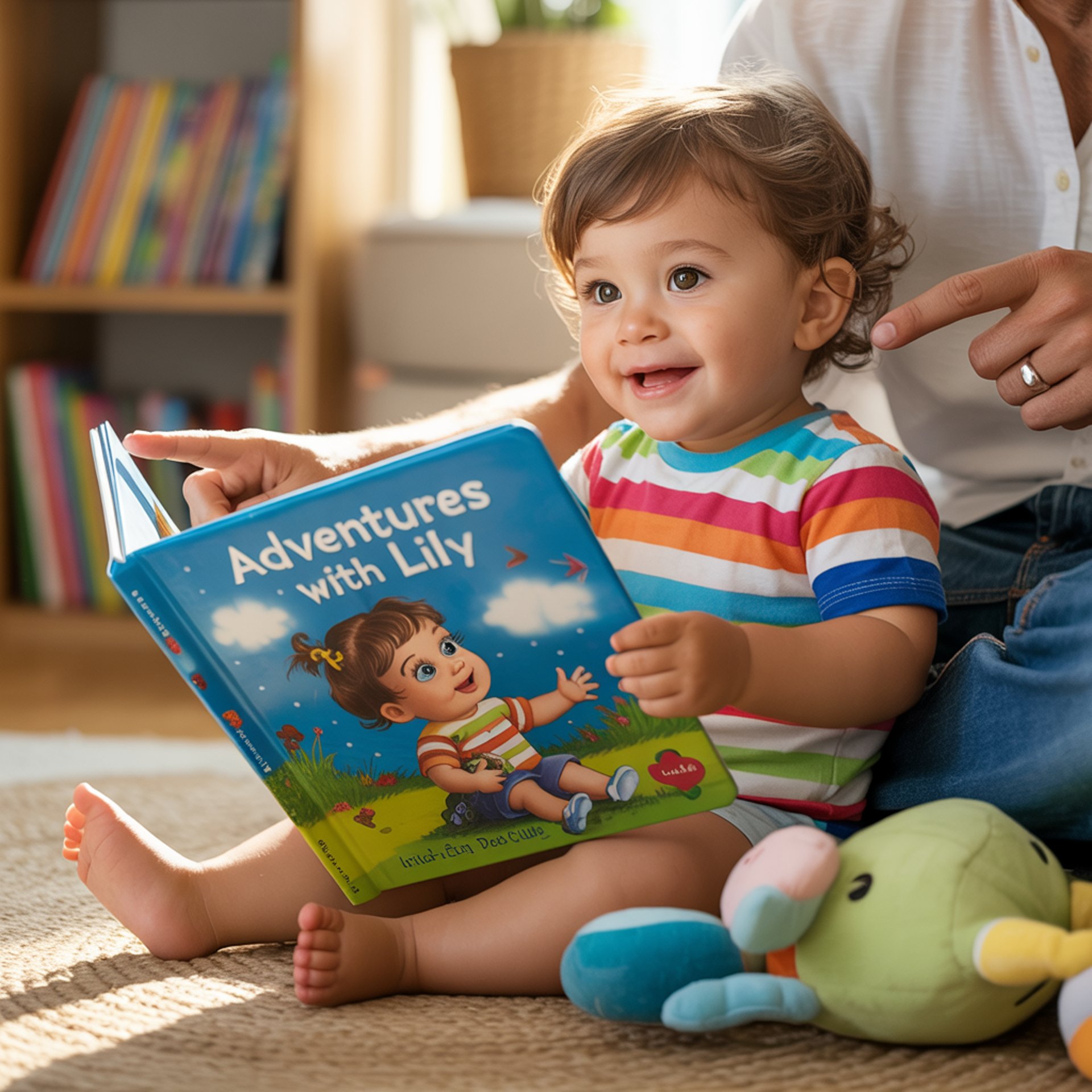
The Power of Storytelling to Build Your Child's Confidence
Every child has a story worth telling. Storytelling isn’t just fun — it helps kids feel seen, boosts confidence, and sparks imagination. Here’s how to make story time meaningful and magical.
Tale Tailor Team
10/20/20257 min read
My friends son was convinced he was "bad at everything." He's eight. I asked him what he meant, and he rattled off a list: bad at math, bad at soccer, bad at making friends (objectively untrue—the kid has more friends than I do).
I could have argued with him, told him he was wrong, pulled out evidence to the contrary. Instead, I told him a story.
"Want to hear about the time your Aunty Sam failed her driver's test three times?
His eyes lit up. "Really?"
That story—and the dozens that followed over the next few months—changed something. Because stories do what lectures can't: they show kids that struggle is normal, growth is possible, and who they are right now is enough.
Why Kids Doubt Themselves (And Why It's Getting Worse)
Childhood confidence has taken a hit. A 2023 study from the Child Mind Institute found that anxiety and self-doubt in children ages 6-12 have increased by 27% in the past decade. The reasons are complex—social media comparison, academic pressure, overscheduling, less free play—but the result is the same: more kids doubting their worth and capabilities.
And here's the kicker: traditional reassurance doesn't always help. When we say "You're great at math!" to a kid who just failed a test, they don't believe us. It sounds like we're either lying or not paying attention.
But stories? Stories bypass defensiveness. They offer proof that setbacks aren't permanent and that the adults they trust have survived hard things too.
How Stories Build Confidence (The Science Part)
Neuroscientists have discovered that when we hear stories, our brains respond differently than when we hear facts or advice. Stories activate multiple brain regions—not just the language-processing areas, but also the sensory and motor cortices. We experience stories rather than just hearing them.
This is huge for kids. When they hear a story about someone overcoming a challenge, their brain simulates that experience. It's like a mental rehearsal. They begin to believe: If that happened to them, maybe I can handle hard things too.
Psychologist Dan McAdams, who studies narrative identity, found that the stories we tell ourselves (and that others tell us) literally shape our sense of self. Kids who hear stories about resilience develop resilient identities. Kids who hear stories about growth develop growth mindsets.
Storytelling isn't just entertainment. It's identity construction.
The Stories That Actually Build Confidence
1. Family Struggle Stories (The Real Ones)
My daughter was terrified to try out for the school play. So I told her about the time I auditioned for a solo in fifth grade, forgot all the words, and ran off stage crying.
She stared at me. "You did that?"
"Yep. And you know what? I survived. And two years later, I tried again."
"Did you get it the second time?"
"Nope. But I was proud I tried."
She auditioned. Didn't get the part she wanted. Cried. But then said, "At least I didn't run off stage like you did, Mom."
Progress.
The key: Share stories where you struggled and didn't immediately succeed. Show the messy middle, not just the happy ending. Kids need to know that failure is survivable and that trying again is always an option.
Stories to tell:
Times you failed and learned something
Moments you were scared but did it anyway
Friendships that were hard to make
Things that took you forever to learn
Times you felt "not good enough" and how you dealt with it
2. Bedtime Stories With Brave (Imperfect) Characters
Forget the princess who's perfect and beautiful. Give me the knight who's scared of horses but learns to ride one anyway. The inventor whose first twelve attempts explode. The chef who burns everything until she doesn't.
When we read (or tell) stories where characters struggle, doubt themselves, make mistakes, and still succeed, kids internalize a powerful message: You don't have to be naturally good at something to be worthy of trying.
Books that nail this:
The Girl Who Never Made Mistakes by Mark Pett and Gary Rubinstein
Rosie Revere, Engineer by Andrea Beaty
Jabari Jumps by Gaia Cornwall
The Most Magnificent Thing by Ashley Spires
But honestly? You can adjust any story. When my kids were younger, I'd improvise at bedtime. "Once there was a dragon who was afraid of flying..." and we'd make up the rest together. The hero always struggled. Always doubted. Always figured it out eventually.
3. "When You Were Little" Stories
Kids love hearing stories about themselves. But not just the cute moments—the hard ones too.
"Remember when you were three and you were scared to go down the slide? You sat at the top for like ten minutes. And then you did it. And you were so proud you went down seventeen more times."
These stories become part of their narrative. They're evidence of their own resilience, proof that they've overcome hard things before.
Keep a running list of moments when your kid:
Was scared but brave
Struggled and persisted
Was kind when it was hard
Tried something new
Bounced back from disappointment
Bring these up when they're doubting themselves. "You've done hard things before. Remember when..."
4. Creative Play: Letting Them Be the Storyteller
This is where the magic happens. When kids create their own stories—through play, drawing, or just making stuff up—they work through fears, practice confidence, and experiment with different outcomes.
My son goes through phases where he creates elaborate superhero scenarios with his toys. I used to half-listen. Then I realized: in his stories, the hero always starts out weak or scared and becomes strong. He's literally storytelling his way through his own insecurities.
Ways to encourage this:
Story stones: Paint or draw simple images on rocks (a house, a person, a tree, a star). Pull a few out and make up a story together using those elements.
"What happens next?" game: Start a story and have them continue it. Take turns. The story can be as silly or serious as they want.
Puppet shows: Even a sock with googly eyes can become a character working through something hard.
Drawing stories: Give them paper and markers. Ask them to draw a story about someone who was nervous but tried something anyway.
The content matters less than the process. When kids control the narrative, they practice agency. They see that outcomes can change, that characters (and people) can grow.
Storytelling Strategies for Different Ages
Ages 3-6: Simple stories with clear emotions. "The Little Bunny was scared of the dark, but her mom told her..." Use stuffed animals or puppets to act out challenges and solutions. Keep it short and concrete.
Ages 7-10: Stories with more complexity. They can handle nuance now—characters who are scared and brave, who fail and keep trying. Ask them to help solve the character's problem. "What do you think she should do next?"
Ages 11+: Real stories. Share your own struggles more openly (age-appropriately). Ask them to tell you stories about their day, their worries, their hopes. Listen for the narrative they're building about themselves, and gently challenge the negative ones with alternative perspectives.
The Story Frame That Builds Resilience
Researchers have identified a specific story structure that builds resilience in children. It's called the "redemptive narrative" and it goes like this:
Challenge/Struggle: Something was hard
Emotion: It felt bad/scary/frustrating
Action: Someone did something (tried, asked for help, persisted, rested and tried again)
Growth: Something changed or was learned
This isn't toxic positivity. You're not saying "everything happens for a reason" or "it all worked out perfectly." You're saying: "Hard things happen, and we survive them. We grow. We keep going."
Use this frame when telling stories, and kids begin to use it too. They start reframing their own experiences from "I'm bad at this" to "This is hard right now, and I'm figuring it out."
When Stories Reveal Deeper Worries
Sometimes the stories kids tell (or the questions they ask about stories) reveal anxieties you didn't know they had.
My daughter once asked, during a bedtime story, "But what if the character tries really hard and still fails?"
Good question, kid.
We talked about it. Sometimes you do try hard and it doesn't work out. And that's sad. But it doesn't mean you're a failure—it means that thing wasn't yours right now. Maybe ever. And that's okay too.
Stories create safe spaces to explore scary questions. Pay attention to what they ask about, what they want to hear again and again. It's often a window into what they're processing.
Resources for Story-Building Confidence
Books for Parents:
The Enchanted Hour: The Miraculous Power of Reading Aloud by Meghan Cox Gurdon
Raising Confident Kids by Jennifer S. Miller—practical strategies grounded in research
The Read-Aloud Family by Sarah Mackenzie—makes storytelling feel doable
Story Prompts & Resources:
StoryWorth (website)—sends weekly story prompts you can answer and share with kids
Storyline Online (free website)—actors read children's books aloud, great for sparking conversation
The Moth podcast—real people telling real stories; listen together with older kids
Activities:
Create a "Family Story Night" once a month where everyone shares a story (real or made-up)
Start a voice memo collection of your child telling stories—they'll treasure these later
Make story cubes or cards together and use them for creative storytelling
The Messy Truth About Storytelling
Here's what nobody tells you: you don't have to be good at this. You don't need to be a natural storyteller or have perfect recall of your childhood. You can stumble through stories. You can forget details. You can tell the same story seventeen times because your kid asks for it.
What matters is that you're doing it. That you're saying, through stories: People struggle. People survive. You come from people who've figured hard things out. You will too.
Last week, my son told me a story. About a kid who thought he was bad at math but then realized he just needed to practice more. About how the kid's mom once told him she failed her driver's test three times, so he figured if she could keep trying, maybe he could too.
He didn't realize he was telling me his own story. How he was rewriting his own narrative from "I'm bad at everything" to "I'm learning."
That's the power of storytelling. It doesn't just build confidence in a single moment. It builds the narrative foundation kids will carry with them for life. The story they tell themselves about who they are and what they're capable of.
Start Tonight
You don't need a plan or a curriculum. Just start.
Tonight, at bedtime, tell them a story about a time you were scared. Or unsure. Or convinced you couldn't do something. Tell them what happened. How you felt. What you did. What you learned.
Or ask them: "Want to make up a story about a kid who was nervous about something?"
Or pull out a book you've read a hundred times and ask: "What do you think the character was feeling when that happened?"
That's it. That's enough.
Because every story you tell is a brick in the foundation of their confidence. Every story says: You are part of a long line of people who've faced hard things and kept going. You belong to that story. You can write your own.
So tell the stories. The real ones, the made-up ones, the silly ones, the ones where you failed spectacularly. Tell them at bedtime, in the car, over breakfast, whenever.
Your kids are listening. And they're learning the most important story of all: that they are capable, worthy, and brave enough to write their own.
contact us
© 2026. All rights reserved.